'%3e%3cpath%20d='M19.3359%2018.2109L14.7344%2013.6094C15.875%2012.2188%2016.5625%2010.4375%2016.5625%208.49609C16.5625%204.04297%2012.9492%200.429688%208.49609%200.429688C4.03906%200.429688%200.429688%204.04297%200.429688%208.49609C0.429688%2012.9492%204.03906%2016.5625%208.49609%2016.5625C10.4375%2016.5625%2012.2148%2015.8789%2013.6055%2014.7383L18.207%2019.3359C18.5195%2019.6484%2019.0234%2019.6484%2019.3359%2019.3359C19.6484%2019.0273%2019.6484%2018.5195%2019.3359%2018.2109ZM8.49609%2014.957C4.92969%2014.957%202.03125%2012.0586%202.03125%208.49609C2.03125%204.93359%204.92969%202.03125%208.49609%202.03125C12.0586%202.03125%2014.9609%204.93359%2014.9609%208.49609C14.9609%2012.0586%2012.0586%2014.957%208.49609%2014.957Z'%20fill='%23535B62'/%3e%3c/g%3e%3cdefs%3e%3cclipPath%20id='clip0_12799_29299'%3e%3crect%20width='20'%20height='20'%20fill='white'/%3e%3c/clipPath%3e%3c/defs%3e%3c/svg%3e)

Exploring the Five Common Types of Gears

Gears are mechanical devices used to transmit power and motion between rotating shafts. They are an essential component in various machines, ranging from simple devices to complex industrial equipment. They consist of toothed wheels that mesh together, allowing force and motion to be transmitted from one gear to another. Different types of gears are designed to meet specific requirements and applications. In this article, we will explore five common types of gears: spur gears, helical gears, bevel gears, hypoid gears, and worm gears.
Types of Gears
Spur Gears
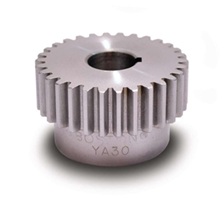
Spur gears are the most common and simplest type of gears. They have straight teeth that are parallel to the gear's axis. The teeth are aligned on the cylindrical surface of the gear and engage with another gear to transmit motion. Spur gears are known for their efficiency, reliability, and ease of manufacturing. They are commonly used in applications where speed reduction or increase is required, such as in machining tools, transmissions, and conveyor systems.
Helical Gears
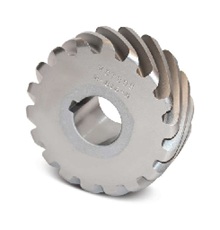
Helical gears are an improvement over spur gears, offering smoother and quieter operation. The teeth on helical gears are angled rather than straight, creating a helix shape. This design allows the teeth to gradually engage, reducing noise and providing a smoother transfer of power. Helical gears are commonly used in applications that require high load capacity and precision such as automotive gearboxes and printing machines.
Bevel Gears
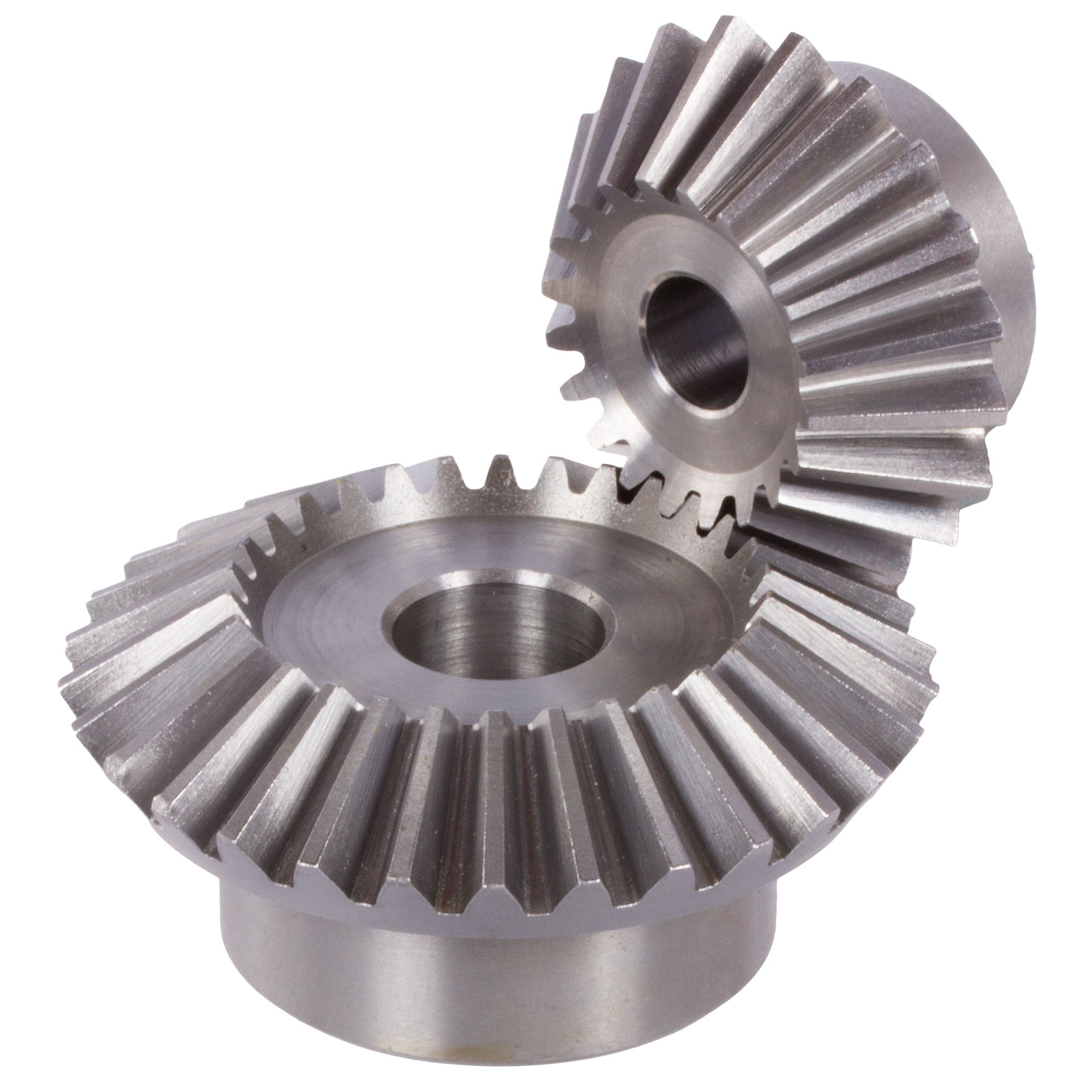
Bevel gears are designed with intersecting axes and teeth that are conically shaped. They are used to transmit power between non-parallel and intersecting shafts. Bevel gears can be further classified into straight bevel gears and spiral bevel gears. Straight bevel gears have straight teeth and are commonly used in applications such as hand drills and printing presses. Spiral bevel gears have curved teeth and provide smoother operation and higher load capacity, making them suitable for heavy-duty applications like marine propulsion systems and automotive differentials.
Hypoid Gears
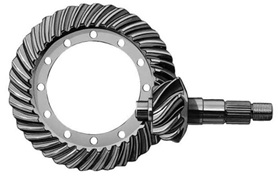
Hypoid gears are a type of bevel gear that has non-intersecting and offset axes. This unique design allows for more efficient power transmission between shafts that are positioned at different angles. Hypoid gears are commonly found in applications where high torque is required, such as in automotive drivetrains and industrial machinery. They offer advantages such as compactness, durability, and quiet operation.
Worm Gears
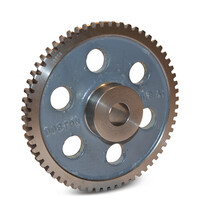
Worm gears consist of a worm (a screw-like gear) and a worm wheel. They have a helical thread that engages with the teeth of the worm wheel, resulting in a compact and efficient power transmission system. Worm gears are known for their ability to provide high gear ratios, making them ideal for applications requiring significant speed reduction such as in conveyor systems, lifts, and steering mechanisms. They offer self-locking capabilities, preventing the back-driving of the system and enhancing safety.
Conclusion
Gears are an integral part of many mechanical systems, enabling power transmission and motion control. Spur gears are known for their simplicity, while helical gears provide smoother operation. Spur Gears and Helical Gears are widely used in various applications. Bevel Gears transmit power between intersecting shafts, while Worm Gears offer high gear ratios and resistance to back-driving. Worms are also essential components in worm gear systems. Selecting the right gear type helps optimize performance for specific mechanical applications.
HVH Industrial Solutions is an authorized distributor of Boston Gear, Linn Gear, Nuttall Gear, and other leading gear and gearbox manufacturers. We offer a wide range of gear products. We work closely with their engineering team to provide superior customer service and engineering support.
For a comprehensive overview of the most common gearbox types, how they differ in design and performance, and which applications each one is best suited for, read our article on Types of Gearboxes.
If you have any questions, write to us via live chat or call or send us a quote request. Our team is always ready to help you.
Request a quote